
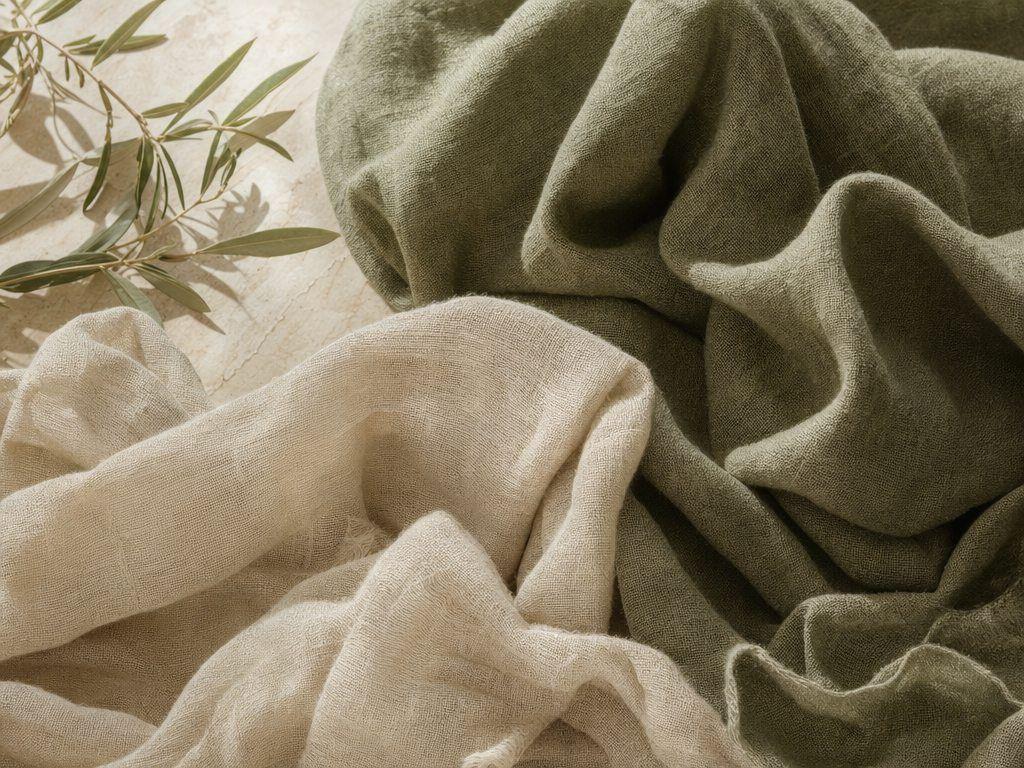
Linen is one of the oldest textiles we know of. Fragments of woven flax have been found in Swiss lake dwellings dating to around 8000 BCE. It was the cloth of Egyptian mummies and of medieval European merchants. It faded from dominance as cotton industrialised and synthetics proliferated. Now it is back — and not simply because sustainability has become a selling point.
The appeal of linen as a material is genuinely grounded in its properties. Flax, the plant from which linen is made, grows quickly and with minimal inputs. It thrives on marginal land unsuitable for food crops. It requires little to no irrigation in most of its growing regions — primarily Belgium, France, and the Netherlands — because rainfall generally provides what it needs. It requires no pesticides in well-managed cultivation, though this varies by practice. The entire plant is usable: fibre from the stalk, oil from the seeds, residues as biomass. Waste is low.
What linen does well
As a fabric, linen has characteristics that synthetics cannot replicate and cotton struggles to match. It is highly breathable, wicking moisture away from the skin and allowing airflow. It becomes softer with washing rather than degrading. A linen garment bought in good quality tends to last years rather than seasons — the fibre is strong, resistant to abrasion, and does not pill. At end of life, it biodegrades.
The thermal properties are particular: linen is cool in warm weather because the fibre conducts heat away from the body, but it is also a reasonable insulator. This makes it functional across a wider range of conditions than its ‘summer fabric’ reputation suggests. Well-made linen shirts and trousers, properly cared for, age well in a way that fast fashion pieces cannot.
The wrinkle question
The principal objection to linen in everyday wardrobes is its creasing. Linen wrinkles readily, and the wrinkling is visible. For many years this positioned it as casual or holiday fabric rather than professional. This has shifted — partly because remote work has relaxed dress codes, partly because the fashion conversation around ‘relaxed dressing’ has legitimised creased linen as aesthetic rather than unkempt.
The more meaningful point is that the ‘problem’ of linen wrinkling is partly manufactured. Conventional cotton suits are often treated with wrinkle-resistant finishes — chemical applications that reduce creasing but involve formaldehyde-based compounds. Linen that wrinkles is linen without those treatments. Whether the crease is a problem depends on the context and whether you think it is worth the chemistry to remove it.
Processing and certification
Like organic cotton, linen’s environmental credentials depend on what happens after the field. European flax, certified under the European Flax standard, comes with strong provenance — but that certification covers the fibre, not the processing. Dyeing, bleaching, and finishing linen fabric follows the same chemistry as other textiles.
Brands using undyed or naturally pigmented linen sidestep some of this. Natural, ecru, and lightly stonewashed linens avoid the dyebath entirely. For coloured linens, the processing credentials are worth checking through the same frameworks — bluesign certification, Oeko-Tex 100 on finished products, or GOTS if the brand has pursued full-chain certification.
The European provenance of most linen sold in the UK adds an element of traceability that cotton from Central Asia or Bangladesh often cannot match. The shorter supply chain does not eliminate processing concerns, but it makes them more traceable.
Linen is not a miracle fabric. It requires care, it wrinkles, and it has processing considerations like any other textile. But as a starting point — a crop that meets some of the strongest criteria in the eco criteria framework — gives back to soil, grows without irrigation, and produces fabric that lasts — it has genuine credentials that go beyond trend.