
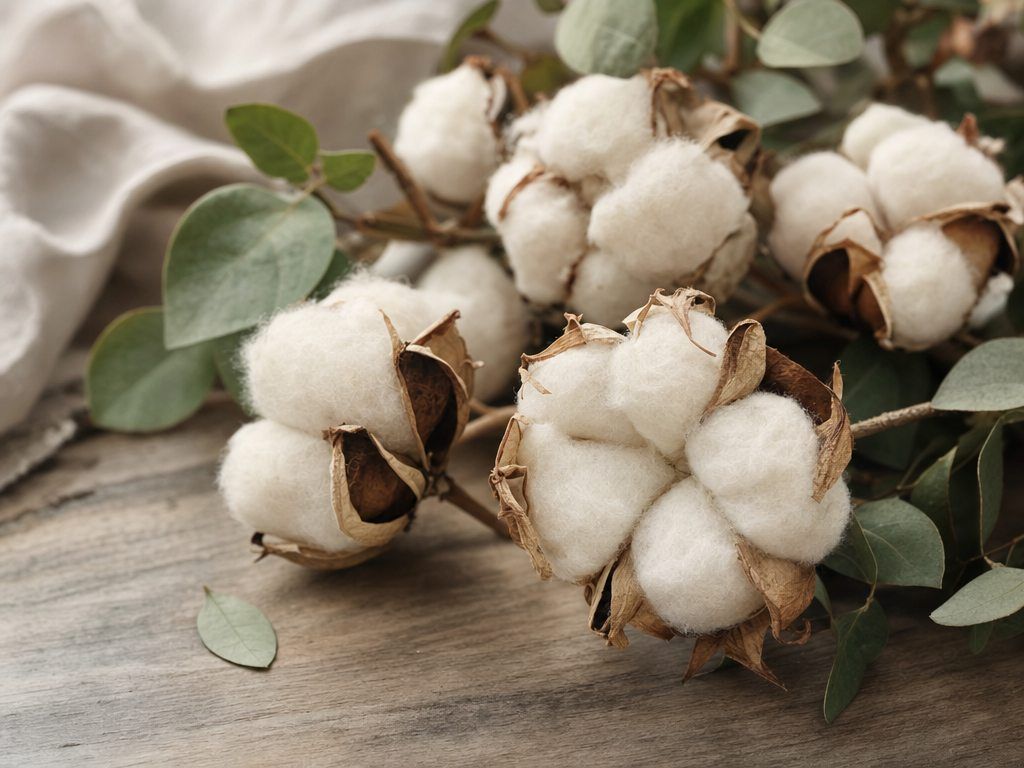
The word ‘organic’ appears on more clothing labels than ever. It also means less than it should.
Organic cotton cultivation — growing fibre without synthetic pesticides, herbicides, or genetically modified seed — is a meaningful environmental improvement over conventional production. Conventional cotton uses roughly 16 percent of all insecticides sold globally despite covering only 2.5 percent of cultivated land. The shift to organic reduces chemical runoff, protects soil microbial life, and improves conditions for farmworkers. These are real gains.
What the label on a finished garment does not tell you is how that cotton was processed once it left the farm. Bleaching, dyeing, and finishing textiles involves a different category of chemistry entirely. Organic fibre can legally travel through a factory using azo dyes, heavy-metal mordants, and formaldehyde-based wrinkle treatments, and the garment can still carry ‘made with organic cotton’ on the swing tag. The farm story and the factory story are not the same story.
The certification gap
Two certifications are worth understanding here, because they address different things.
The Organic Content Standard (OCS) verifies that a product contains the certified organic material it claims to contain. It checks the chain of custody — that the organic cotton at the farm matches the organic cotton in the garment. It does not require any particular standard for processing chemistry or social conditions.
The Global Organic Textile Standard (GOTS) covers both the farm and the factory. It requires organic fibre certification at source, then imposes restrictions on processing chemicals (no azo dyes, no heavy metals, limits on toxic finishing agents), wastewater treatment requirements, and social criteria throughout the supply chain. GOTS-certified garments carry a higher bar.
A swing tag saying ‘made with certified organic cotton’ tells you OCS is likely involved — not GOTS. The distinction matters if you care about what happens between the field and your wardrobe.
What to look for in practice
If a brand is using GOTS-certified cotton, they will say so. The certification has enough consumer recognition that brands have an incentive to name it. If the copy uses vaguer language — ‘organic cotton’, ‘sustainably grown fibre’, ‘natural materials’ — it is reasonable to ask which certification is involved and at what scope.
Some brands address the processing question without formal GOTS certification by using bluesign-certified factories (which audit chemistry and resource use) alongside organic fibre. This is a coherent approach, though it requires checking two certificates rather than one.
A useful proxy: brands that publish their factory list and show their certification scope are generally operating with more transparency than those that do not. A brand naming three factories in Portugal and showing their Oeko-Tex certification numbers has made itself accountable in a way that makes misleading claims more expensive.
The volume question
One aspect of organic cotton claims that receives less attention than it deserves: what percentage of a brand’s total output uses organic fibre? A brand running one certified capsule collection while producing the rest of its range conventionally is making a different kind of claim than a brand that has converted its entire supply chain.
This is not to say partial conversion is worthless — any reduction in pesticide-intensive production is a gain. But the framing of ‘we use organic cotton’ without context about volume can misrepresent a brand’s actual footprint. The most useful organic cotton commitments come with a percentage, a timeline, and a plan for the rest.
The simplest version of the question: when you see ‘organic cotton’ on a tag, ask whether the whole garment is certified, whether the processing chain is also certified, and how much of the brand’s range meets that standard. Brands with genuinely strong practices will have answers to all three.